
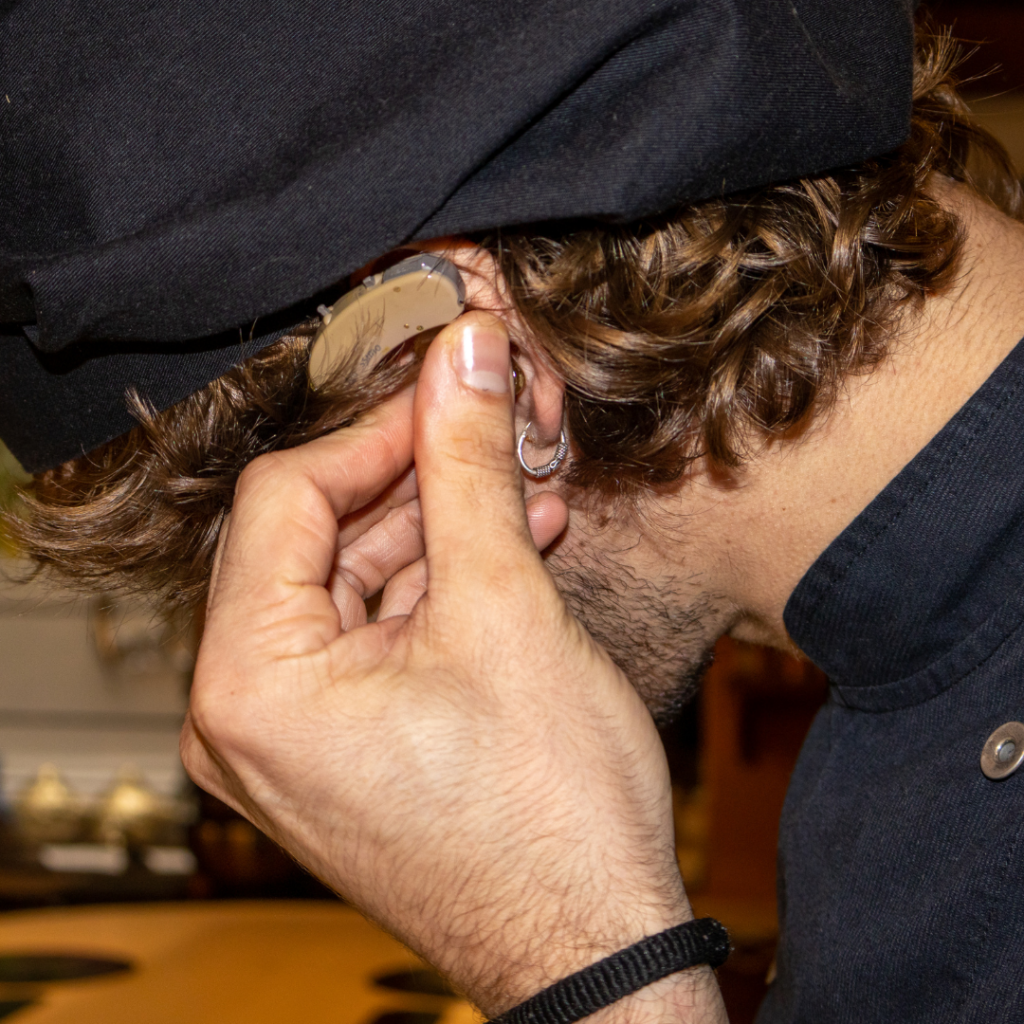
Active restaurant conversations are frequently hard to decipher when surrounding background noise clashes with your hearing. We perform comprehensive diagnostic assessments to evaluate hearing in quiet rooms and challenging acoustic spaces to identify functional deficits. Once the diagnostic etiology of your difficult hearing is established, we implement personalized clinical and technological strategies.
Understanding the Contrast Between Quiet Hearing and Restaurant Noise
Quiet rooms provide a favorable signal-to-noise ratio, meaning a speaker’s voice is much clearer than the sounds around it. Commercial restaurant spaces present the polar opposite acoustic dynamic. Multiple voices, music, kitchen noise, and reverberation overlap with speech, forcing the ears and brain to work harder to separate the person you want to hear.
These auditory struggles commonly accompany untreated high-frequency hearing loss, central processing delays, or presbycusis. Cognitive exhaustion, physical fatigue, low ambient lighting, and increased distance from your conversational partner further compound the challenge. Certain patients demonstrate normal sensitivity on routine audiograms while struggling significantly during advanced speech-in-noise testing. Experiencing speech-recognition struggles in noisy dining venues warrants a formal audiological evaluation regardless of seemingly normal quiet hearing.
Diagnostic Protocols for High-Frequency Hearing Loss
We begin with a history of the situations that cause trouble, along with questions about noise exposure, tinnitus, medications, family history, and changes in either ear.
Pure-tone audiometry measures the softest sounds you can hear at different pitches through air and bone conduction. High-frequency hearing loss commonly presents on the audiogram as a characteristic precipitous drop in the higher frequency ranges. Additional testing may include tympanometry to assess middle-ear function and word-recognition testing to measure speech understanding.
A quiet sound booth cannot replicate complex dining room acoustics, which makes clinical speech-in-noise testing especially informative. The test assesses word and sentence discrimination as background acoustic competition intensifies. Interpreted together, these clinical scores demonstrate whether listening struggles originate from loss of audibility, speech clarity deficits, auditory processing delays, or combined elements.
Understanding Auditory Processing Disorders in Noisy Environments
A diagnosed auditory processing disorder affects how the brain’s auditory cortex analyzes, organizes, and interprets sound. The ears may detect tones at expected levels, but the brain may have difficulty organizing competing signals, distinguishing similar speech sounds, or following rapid conversation. We systematically verify peripheral hearing health before establishing whether an advanced auditory-processing evaluation or medical referral serves your needs.
What Strategies Can Improve Hearing in Noisy Environments?
Simple situational adjustments enhance the speech signal entering your ears and offer clearer facial cues. Before leaving home, identify quieter dining venues or plan to eat during less crowded service times. Establishments designed with high-walled booths, acoustic wall treatments, heavy fabrics, and carpeting reduce reverberation far better than modern industrial spaces with bare surfaces.
Upon entering the restaurant:
- Request table placement positioned away from dishwashing stations, bustling bars, sound speakers, and celebratory gatherings.
- Sit with a perimeter wall directly behind you to cut down on ambient noise approaching from the rear.
- Position yourself directly opposite your companions where direct lighting highlights their facial expressions.
- Keep the distance between speakers as short as comfortably possible.
- Angle your stronger-hearing ear toward the primary individual you wish to converse with.
- Ask the speaker to rephrase the missed portion instead of repeating everything.
- Explicitly repeat back important logistical details instead of pretending you caught every word.
- Take a brief listening break when fatigue begins to build.
- Request that dining partners articulate words distinctly at an unhurried, natural speed.
- Raised or shouting voices warp acoustic phonetics and rarely improve speech intelligibility.
Assistive Hearing Tools and Technology for Complex Acoustic Environments
Selecting the ideal assistive technology depends upon underlying diagnosis, specific acoustic challenges, and verified hearing loss. Advanced hearing aids utilize beamforming directional microphones, adaptive noise reduction, and specialized restaurant programs to elevate voices directly ahead while suppressing ambient chatter. Patients must uphold realistic expectations because modern amplification cannot strip out every ambient human voice completely.
A remote microphone can provide a stronger improvement in the signal-to-noise ratio. The accessory is worn on the lapel or set near the speaker, streaming their voice directly into compatible hearing aids or wireless audio receivers. This reduces the effects of distance and surrounding noise.
Further practical hearing technology options include:
- Dedicated table microphones engineered to capture small-group dialogue
- Integrated telecoil programs for tapping into venue-wide induction loop systems
- Mobile phone live-transcription apps offering real-time conversational subtitles
- Advanced hearables incorporating assistive directional listening programs
- Sound-level or restaurant-review tools for finding quieter locations
Our audiology staff helps you evaluate options, ensures wireless compatibility, and trains you on operating your chosen equipment.
The Clinical Role of Audiologists in Managing Loud Environments
A hearing evaluation can move the conversation beyond “I hear fine in quiet.” Our audiology team assesses the unique environments, speaking partners, and ambient noise profiles that challenge you to choose targeted diagnostic tools. Your diagnostic appointment may incorporate pure-tone air and bone thresholds, acoustic middle-ear testing, word-recognition scores, and speech-in-noise measures. Auditory-processing testing may be considered when the history and initial results support it.
Sudden, one-sided, or rapidly worsening symptoms may require medical evaluation by an ear, nose, and throat physician. Comprehensive clinical care targets the physiological roots of hearing difficulties rather than simply writing them off as bad restaurant acoustics.
Schedule a Hearing Evaluation Today
If dining in loud spaces leaves you feeling isolated, fatigued, or guessing at missed speech, contact us to schedule a thorough hearing evaluation. Our specialists can introduce effective interventions to support your hearing in noisy environments via precision hearing aid fittings, assistive devices, or audiological rehabilitation.
Contact us to request an appointment and take the next step toward easier conversations.