For first-time parents, discovering that their infant experiences auditory deficits can feel deeply shocking and distressing. However, the optimistic truth remains that via rapid evaluation and proper care, babies experiencing hearing issues are able to thrive. Positively, these infants can master verbal communication, social capabilities, and meaningful connections across their environment, cultivating a deeply rich existence!
Combining external hearing aids with targeted cochlear implantation provides two highly successful approaches for supporting infants with hearing loss. In the passage below, we evaluate their functional mechanisms and clarify how to select the perfect fit for your infant.
Analyzing Infant Auditory Deficits
Auditory loss among infants typically comes from broad health factors, such as:
- Specific genetic factors (even when lacking a documented family history)
- Congenital infections such as cytomegalovirus (CMV) or rubella
- Critical labor complications, including perinatal hypoxia or premature delivery
- Certain clinical medications prescribed during specialized neonatal care
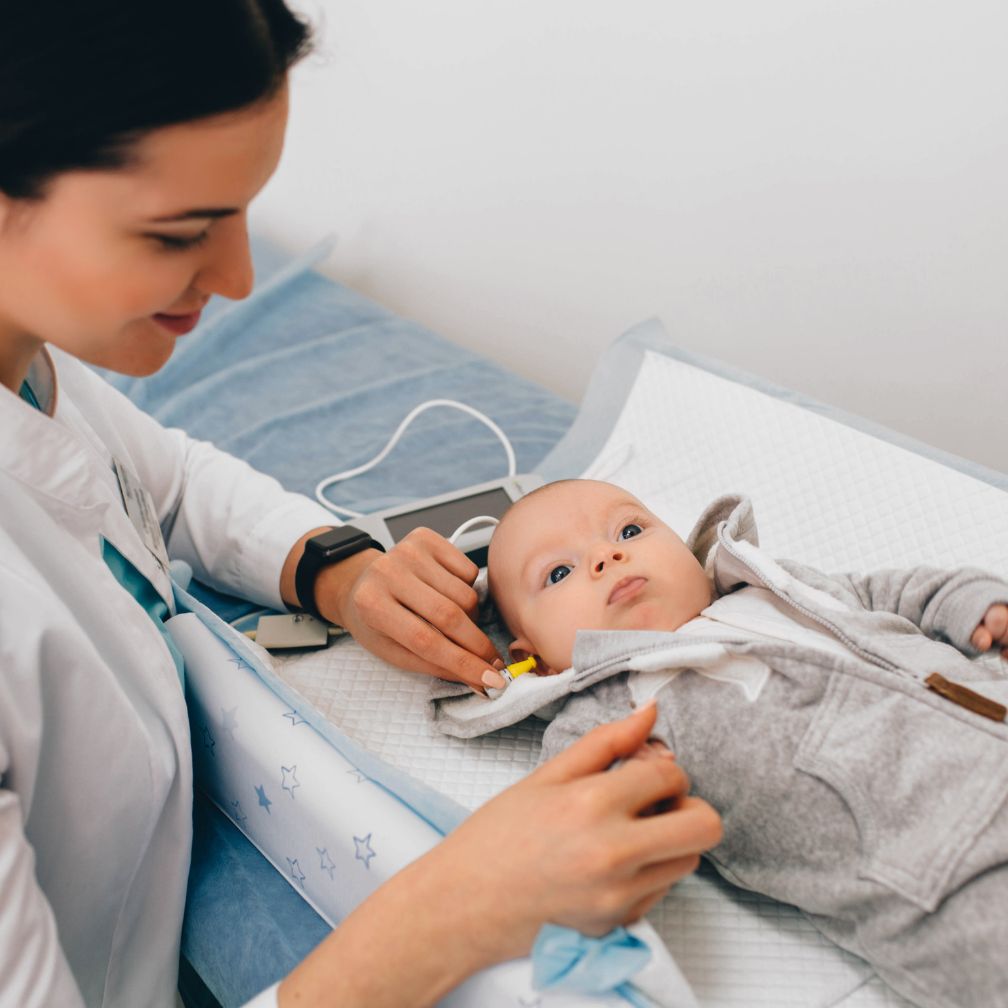
Which phase matters most? Rapid clinical confirmation. Because of this, newborns across the United States receive evaluations for auditory challenges prior to hospital discharge. Specialized pediatric hearing clinicians advocate for the official “1-3-6” intervention timeline:
- Completely screened prior to 1 month
- Complete clinical diagnosis established prior to 3 months
- Therapeutic intervention (employing wearable technology or developmental therapy) initiated by 6 months of age
Fulfilling these timeline goals offers infants their highest probability for superior speech, verbal communication, and brain maturation. If you seek direction regarding these auditory evaluations, your trusted pediatrician stands ready to assist!
Understanding Amplification Devices for Infants
When supporting infants with mild to severe hearing loss, wearable hearing aids routinely serve as the first line of treatment. These miniature, body-worn units boost ambient audio signals, helping babies process spoken dialogue and everyday sounds more distinctly.
Dedicated pediatric-grade hearing devices represent:
- Thoroughly safe for application in newborns only several weeks old
- Built using flexible, soft ear impressions that adjust alongside the infant’s growth
- Designed with locking battery compartments and dedicated pediatric safety components
- Custom-programmed by a dedicated pediatric audiologist to match your child’s hearing profile
As your baby grows, hearing aids necessitate regular clinical recalibrations to guarantee proper fit and maximum performance.
Cochlear Implants for Infants
If a baby experiences severe to profound sensorineural impairment with limited benefit from wearable hearing aids, a cochlear implant is often recommended. Differing fundamentally from conventional amplification tools, cochlear implants:
- Require surgical implantation within the auditory bone structure performed under controlled clinical conditions
- Safely bypass damaged hair cells across the inner ear system
- Translate environmental sound into electrical signals that excite the acoustic nerve pathways directly
Standard cochlear implants remain:
- Officially sanctioned by the FDA for infants as young as 9 to 12 months
- Extremely effective when integrated with early speech therapy and dedicated family support
- Recommended solely following comprehensive diagnostic assessments by a pediatric audiologist and ENT specialist
That multi-step journey involves high-resolution imaging, detailed hearing tests, and open dialogue concerning long-term communicative results.
Hearing Aids vs. Cochlear Implants: What’s the Difference?
- Mild to severe levels of impairment utilize Hearing Aids; Severe to profound hearing loss requires Cochlear Implants
- Non-Invasive wearable application: Hearing Aids; Surgical insertion required: Cochlear Implants
- Acoustic sound amplification: Hearing Aids; Electrical signal stimulation conversion: Cochlear Implants
- Starts at Infancy: Hearing Aids; Starts at 9-12 Months: Cochlear Implants
Final Takeaways: Navigating Infant Hearing Solutions
If your baby has been diagnosed with hearing loss, you possess multiple viable options alongside extensive professional backing. With active assistance from pediatric hearing professionals, many children go on to develop language skills that are on par with their peers.
Whether your child is a candidate for hearing aids or cochlear implants, early action unlocks lifelong developmental success.
Are you seeking answers about your child’s overall hearing wellness? Connect with our office today to receive a complete diagnostic assessment and personalized rehabilitation plan.